

Pounding Through to Strike the Goal
Short Answer: Hockey players at the 2026 Milano Cortina Winter Olympics rely on brute force to withstand intense physical contact with other players and also to strike the hockey puck into the other team’s goal to score as many points as possible to win the game

Image 1: Hockey players from Team USA and Team Canada competing against each other in a hockey game (Image Courtesy of Richard Heathcote/Getty Images/International Olympic Committee)
Winter Olympic sports are mainly about personal achievement and teamwork, regardless if the athletes are competing by themselves or in a team. Furthermore, the natural abilities of these athletes and the various training regimens these athletes partake in are tailored to many of the engineering principles that can be found in the real world. In many cases, there isn’t a better example of a sport that has engineering principles on full display during a game than hockey.
For those unfamiliar with the sport, hockey is a contact sport where opposing teams shove and push past each other to get the hockey puck into the opposing team’s goal to score a point. In order to successfully score as many points as possible to win the game, hockey teams must be able to withstand two very important engineering fundamentals: impulse and force.
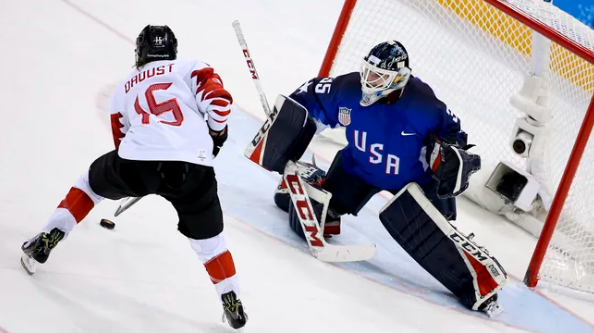
Image 2: Hockey players competing in a hockey game (Image Courtesy of Jean Catuffe/Getty Images/Future US, Inc.)
Impulse refers to the sudden force someone or something experiences in a small amount of time. An example of this is when two hockey players collide with each other or the moment when the hockey stick strikes a hockey puck. It’s sudden, quick, and short-lived. People who are able to withstand these sudden impacts can make great team players for hockey teams.
There’s an additional engineering principle associated with player collisions and hitting the puck, and it’s called a force. This is essentially how hard or how soft a player hits the hockey puck with the hockey stick. The harder or softer the hockey puck is hit correlates to whether or not the hockey puck has too much or too little force behind it to score a point.

Image 3: Hockey players competing to control the hockey puck (black disc on the hockey rink) in a hockey game (Image Courtesy of Gregory Shamus/Getty Images/National Hockey League)
What is more interesting is that, even though most of us won’t experience these two engineering concepts in this manner every day, both impulse and force are very much a part of our everyday lives.
Bottom Line: The impulse and force used by hockey players to win a hockey game influences the gear they wear and the training regimen they have every day.
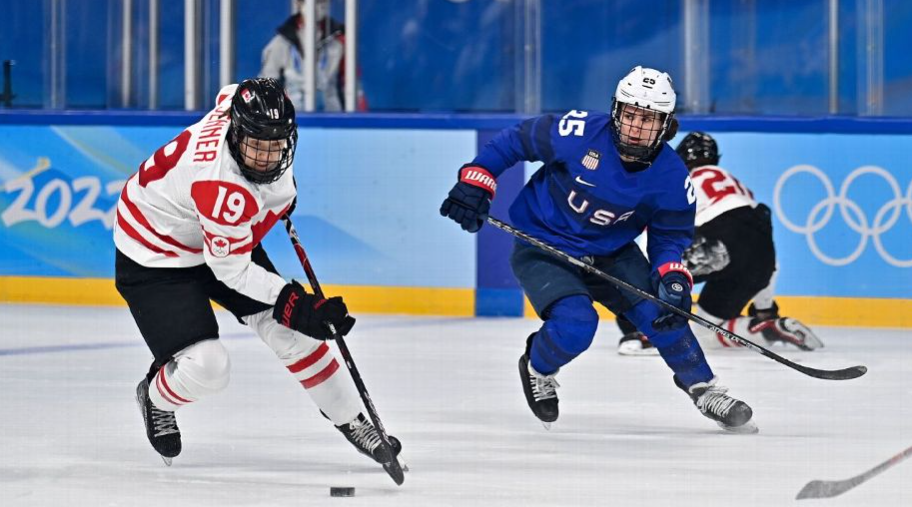
Image 4: Hockey athletes competing at the 2022 Beijing Winter Olympics (Image Courtesy of Song Yanhua/Xinhua via Getty Images/ESPN Enterprises, Inc.)
Let us know what topics you’d like us to tackle next in the comments below!
See more small doses of inspiration from Unifunful Today here
See our thought-provoking articles from Everyday Engineering here and investigate the engineering behind everyday items and places
See our articles from Engineering in Motion here to see how engineering moves us around the world
Missed last week? No worries, we got you! See what we covered last week and more in our weekly status reports here
Discover the vision and values guiding the Unifunful mission here
First time visiting Unifunful? Become familiar with the history and foundation Unifunful was built on here
Meet the contributors who make Unifunful possible here