

Engineering Daytona International Speedway
Short Answer: Daytona International Speedway has been designed and engineered to test performance cars’ acceleration, speed and handling characteristics at their limits.

Image 1: Various cars racing at the 2026 Rolex 24 at Daytona (Image Courtesy of Nadia Zomorodian/The Daytona Beach News-Journal)
Many watched as the Porsche 963 of Porsche Penske Motorsport won the 2026 Rolex 24 at Daytona race this past weekend. The team had to ensure their car was able to handle the turns and straights at Daytona International Speedway in various weather conditions for 24 hours straight. How is Daytona International Speedway designed and engineered where it’s able to test each car at the limit for 24 hours straight?

Image 2: Morris Schuring battles the 2026 Rolex 24 at Daytona in the #912 Porsche 911 GT3 R (Image Courtesy of Nadia Zomorodian/The Daytona Beach News-Journal)
One way Daytona International Speedway is engineered for these kinds of races is by the asphalt surfaces it uses (see the static and kinetic friction explanations in Unifunful’s The Art of Mastering Driving for more on traction). Much of the 3.56-mile racetrack uses PG82-22 Asphalt from Ergon Asphalt, Inc. to help with traction. This also helps racecars maximize power output (see drivetrain explanations in Unifunful’s Keeping in Rhythm with the Power for more detail).
Another way Daytona International Speedway’s 3.56-mile track is engineered to handle this is by having long straights which test each racecar’s straight-line acceleration and speed. These long straights test how quickly and efficiently each car can relay power (see more in Keeping in Rhythm with the Power) and also how effectively their engines can produce power (see more in Old School Heart with New School Brains). Without these straights, the racecars wouldn’t be able to carry much speed throughout the racetrack.
Last, but not least, the cars need to turn left and right. There are two kinds of turns at Daytona International Speedway: banked turns and flat turns.
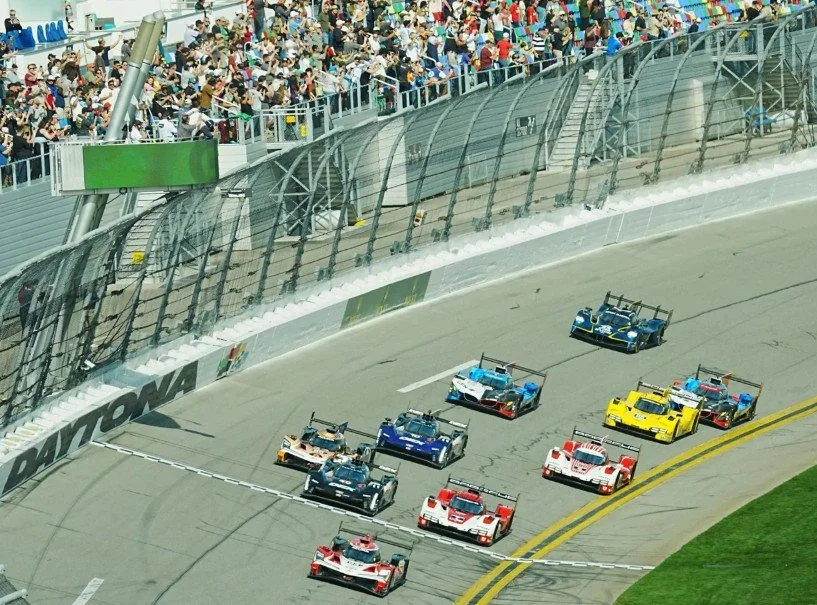
Image 3: Racecars driving on a banked turn at the 2026 Rolex 24 at Daytona (Image Courtesy of Nadia Zomorodian/The Daytona Beach News-Journal)
In banked turns, the racecars are able to safely maintain high speeds due to the slope these banked turns are designed at. This feature is to take into account the centripetal acceleration these cars generate at these portions of the Daytona International Speedway. Flat turns test how well the racecars can brake and make sharp turns. It’s usually in these spots where the winner of the Rolex 24 at Daytona is determined.
Bottom Line: The straights and various turns at Daytona International Speedway test to see which racecar can accelerate, turn and drive the fastest.
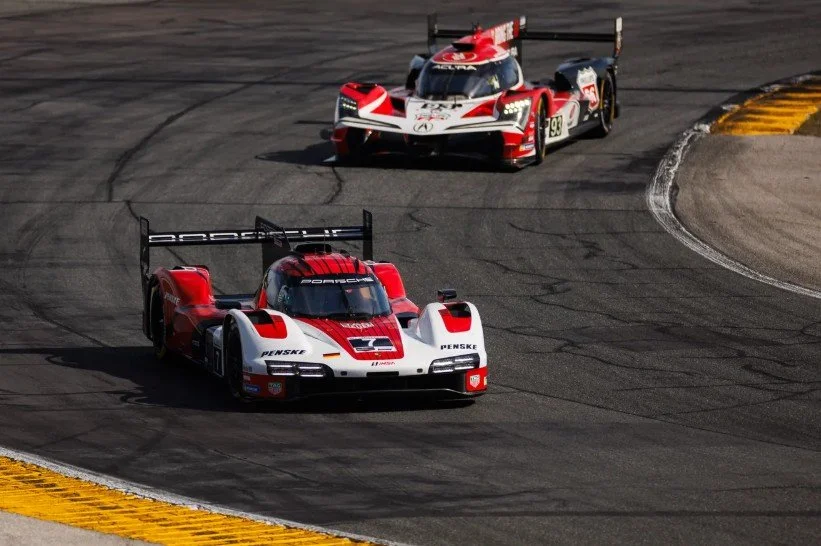
Image 4: Cars entering a flat turn at the 2026 Rolex 24 at Daytona (Image Courtesy of Nadia Zomorodian/The Daytona Beach News-Journal)
Let us know what topics you’d like us to tackle next in the comments below!
See more small doses of inspiration from Unifunful Today here
See our thought-provoking articles from Everyday Engineering here and investigate the engineering behind everyday items and places
See our articles from Engineering in Motion here to see how engineering moves us around the world
Discover the vision and values guiding the Unifunful mission here
First time visiting Unifunful? Become familiar with the history and foundation Unifunful was built on here
Meet the contributors who make Unifunful possible here