

Giving Your Tires a Boost in the Winter
Short Answer: Tire pressures decrease in the cold due to gas molecules in your car’s tires slowing down
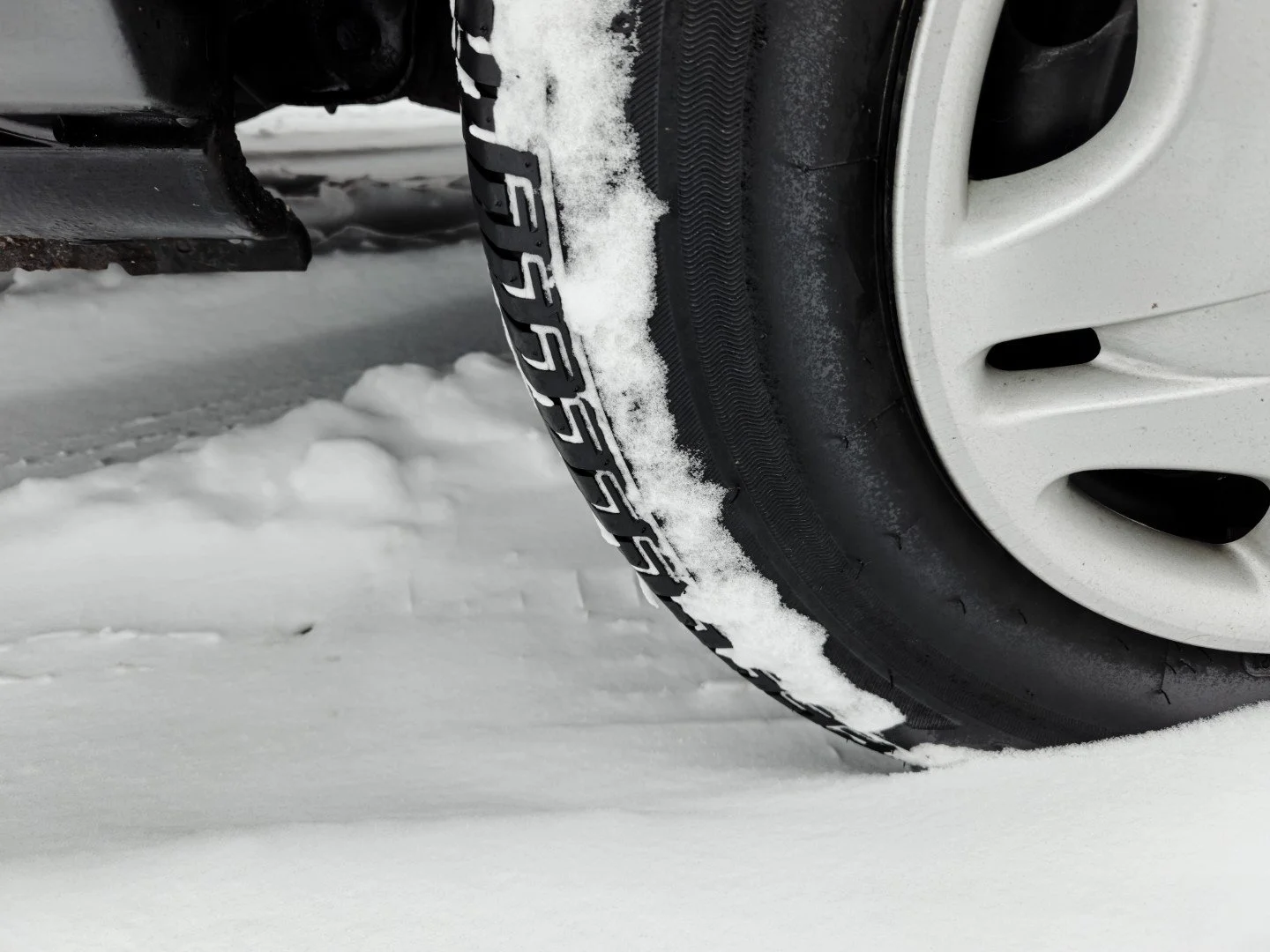
Image 1: A tire facing the cold snow
Let’s unpack why tire pressure decreases in the winter. Gas moves around inside your tire and interacts with the outer walls of your rims and your tires, creating air pressure in your tires or tire pressure. To make sure the gas doesn’t escape, the tires create an air-tight seal with your car’s rims. During normal weather conditions, the tire pressure remains fairly constant regardless if you’re driving or not.
In the winter, however, the tire pressures in your car decrease. Cold air decreases the energy in the gas molecules responsible for the tire pressure on all four wheels of your car, making them not interact with the walls of your car’s rims and tires. This usually results in a momentary decrease in tire pressure.
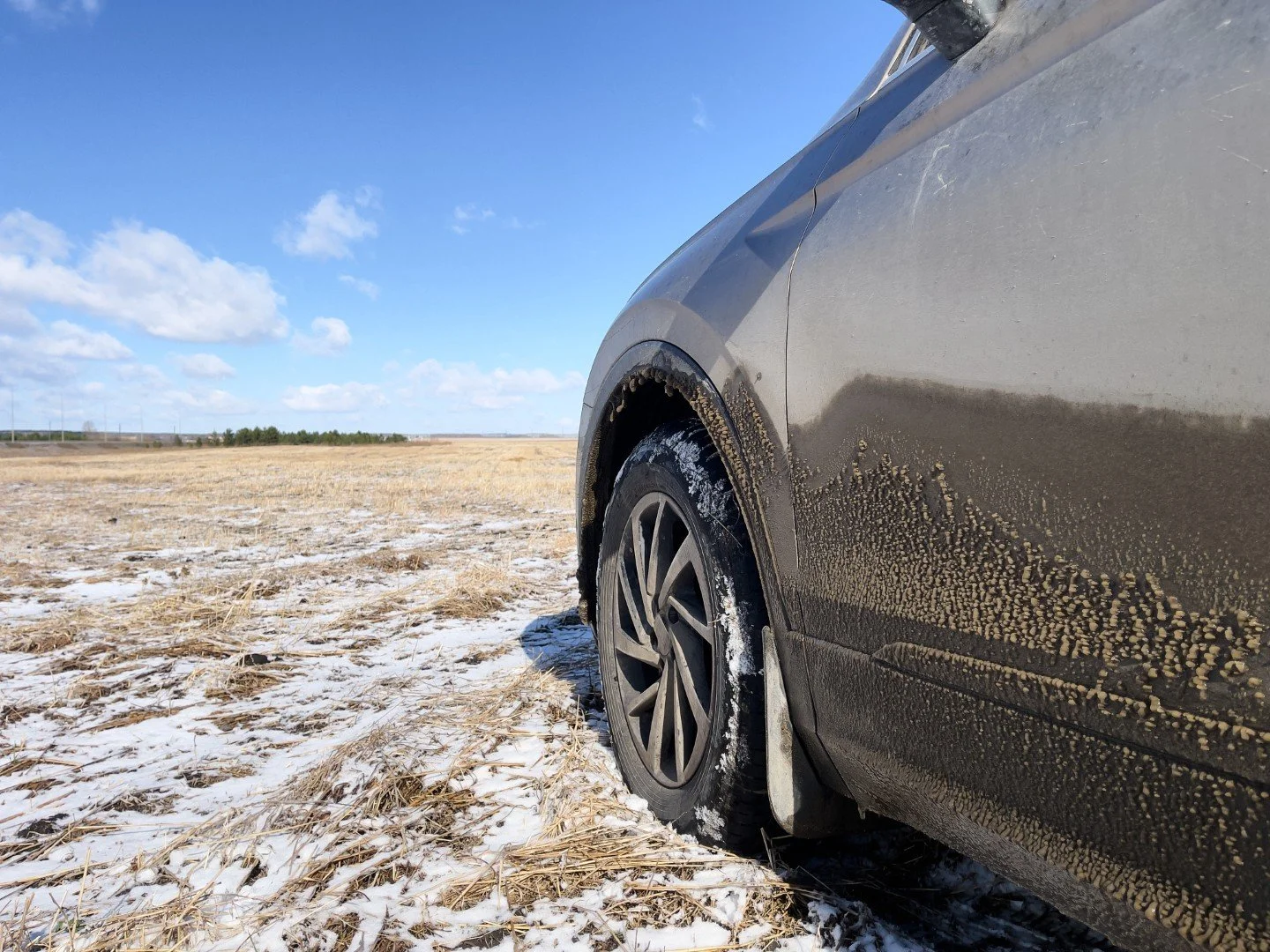
Image 2: Tire bracing the cold pasture
Thankfully, air-tight tires can get their tire pressure back up during slow driving. Here’s a simple formula explaining how that works:
F_rr = C_rr * N
C_rr: rolling resistance coefficient
for your car’s tires
Usually between 0.001 or
0.0015 for cars
N: Normal force car’s tires make
with the road (lbs or N)
As the car’s driving on the road, the tires are generating rolling resistance with the road. This rolling resistance heats up the tires and, consequently, the gas inside the tires. When driven carefully, the tire pressures in your car’s tires should gradually increase until they’re at the recommended tire pressure. If your car doesn’t have a tire pressure monitoring system (TPMS), it’s best to check your tires with a tire pressure gauge before you need to go somewhere just to make sure your tires haven’t lost too much pressure.
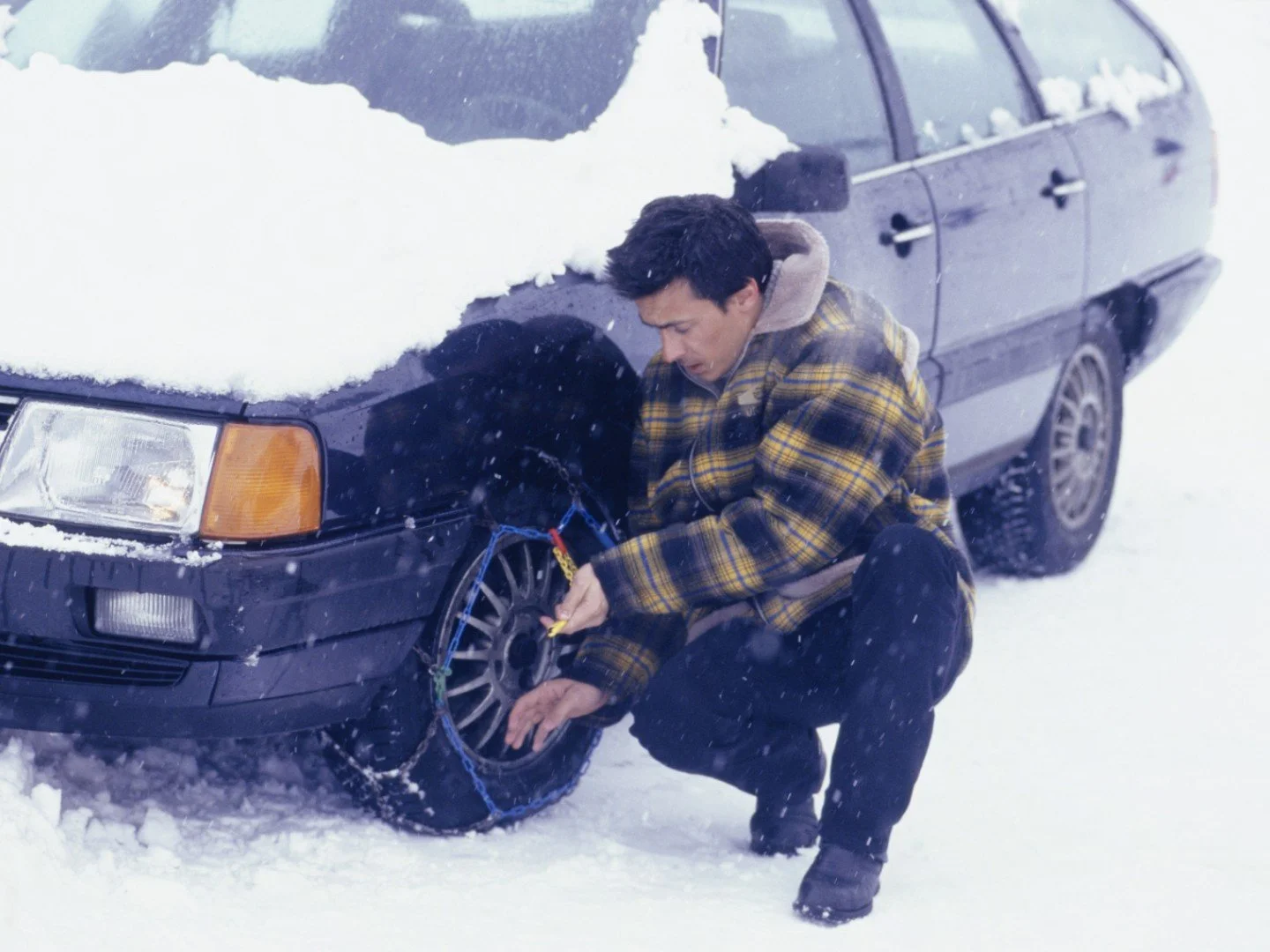
Image 3: A person responsibly checking the car’s tires in the winter
If you’re still curious about tires and how they work, check out the last few paragraphs of the “Handling Life’s Twists, Bumps and Turns” section in The Art of Mastering Driving!
Bottom Line: As long as your car’s tires aren’t losing air, it’s okay if the tire pressure in your car’s tires runs a little low in the beginning since they’ll go up a bit when you’re driving carefully.
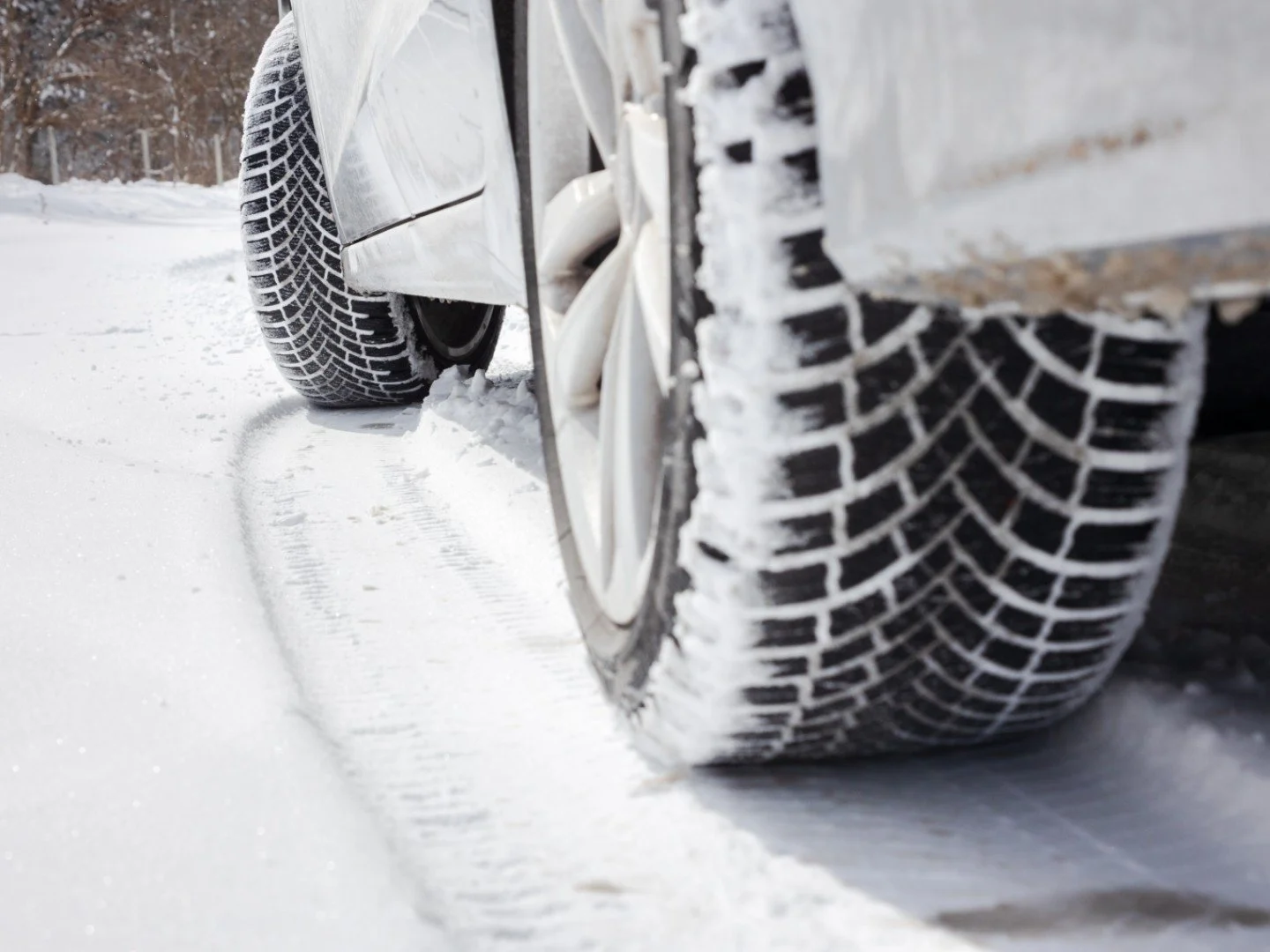
Image 4: Tires successfully navigating the cold, wintry snow
Let us know what topics you’d like us to tackle next in the comments below!
See more small doses of inspiration from Unifunful Today here
See our thought-provoking articles from Everyday Engineering here and investigate the engineering behind everyday items and places
See our articles from Engineering in Motion here to see how engineering moves us around the world
Missed last week? No worries, we got you! See what we covered last week and more in our weekly status reports here
Discover the vision and values guiding the Unifunful mission here
First time visiting Unifunful? Become familiar with the history and foundation Unifunful was built on here
Meet the contributors who make Unifunful possible here